

- Protect Your Nest
Soffit Installation in Ohio The Intake Side of Your Attic System, Installed Right
Soffit isn’t trim. It’s the component that feeds fresh air into your attic — and when it’s missing, blocked, or installed without accounting for your ventilation system, your roof pays the price. Ohio Roof Masters installs vented and solid soffit systems with a Lomanco-certified ventilation professional on every project, so the attic above your new soffit actually breathes the way it should.
Request A Free Quote
Years Serving Ohio
Porject Completed
Years Combined Experience
Office Locations
- Trusted & Certified
Our Certifications & Recognition
Ohio Roof Masters is certified by every major manufacturer – GAF, CertainTeed, Owens Corning, Atlas, James Hardie, and LP SmartSide. Plus, Directorii backs every project with up to $250,000 third-party protection, so you’re covered even if the unexpected happens.

BBB A+ Rating
GAF Certified Plus
CertainTeed Certification

Contractor Directorri

Contractor Directorri

Gold Elite Commercial Contractor

Owens Corning Preferred Contractor

Shingle Quality Specialist
Most Homeowners Don't Know What Soffit Does — Until It Stops Working
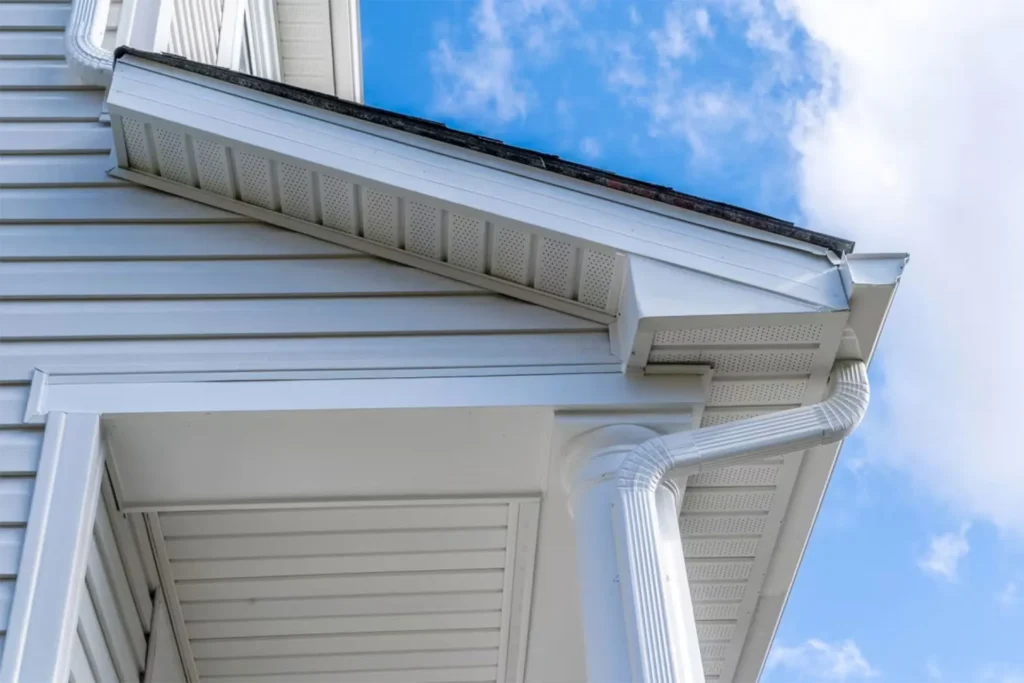
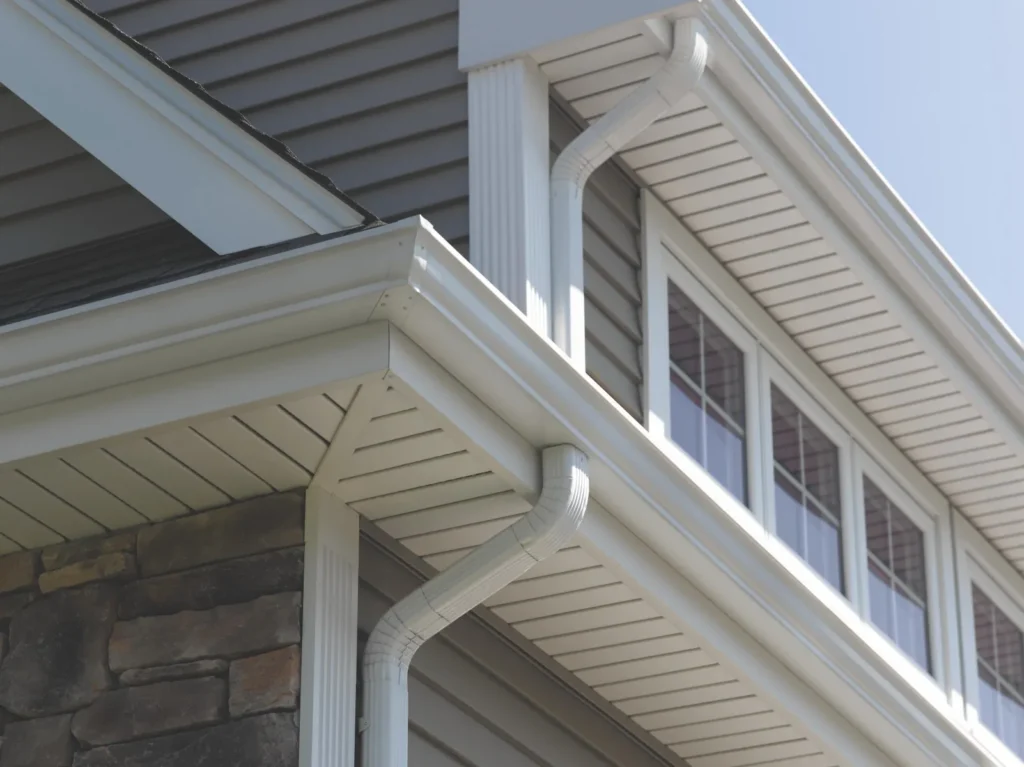
Soffit is the panel material that covers the underside of your roof’s overhang — the horizontal surface between the outer wall of your house and the edge of the roofline. From the ground it looks like trim. From the attic, it’s something more important: the primary intake point for fresh air into your attic ventilation system.
Here’s how it works. Heat and moisture naturally rise. In a properly ventilated attic, cool outside air enters through perforations in the soffit at the roofline’s lower edge, travels up through the attic space, and exits through ridge or gable vents at the roof’s peak. That continuous airflow keeps attic temperatures regulated, prevents moisture accumulation, and removes the heat that would otherwise bake your shingles from the inside out.
When soffit is blocked — by insulation pushed against the eaves, by deteriorated material that’s lost its perforations, or by solid panels installed where vented ones should be — the intake side of the ventilation circuit breaks down. The attic gets hot. Moisture builds. Shingles age faster. In winter, heat escaping through an inadequately vented attic melts snow at the roofline, which refreezes at the eaves as ice dams.
The Wise Owl summary: Soffit keeps your attic breathing. A properly installed soffit system, correctly sized and matched to your exhaust ventilation, is one of the most cost-effective ways to protect your roof investment and extend the life of your shingles.
Your Roof Warranty May Depend on What's Happening Beneath the Overhang
This is the soffit fact most Ohio homeowners don’t know until they have a warranty claim denied: improper attic ventilation is one of the leading causes of manufacturer warranty voidance on asphalt shingles. GAF, CertainTeed, Owens Corning, and Atlas all include attic ventilation requirements in their warranty terms. If a manufacturer inspector finds that your attic lacks adequate intake ventilation — which is delivered primarily through soffit — your shingle warranty can be voided, regardless of how recently the roof was installed.
The physics are straightforward. Shingles are designed to shed heat upward, away from the decking. When the attic below is poorly ventilated, radiant heat from the roof surface has nowhere to go — it accumulates in the attic space and conducts back into the decking and shingles from below. Granule adhesion weakens. Shingle lifespan shortens from above and below simultaneously. A roof that should last 25 to 30 years starts showing failure in 15.
What inadequate soffit ventilation causes:
- Premature shingle granule loss and accelerated aging
- Elevated attic temperatures that reduce shingle adhesive performance
- Moisture accumulation and mold development on attic decking
- Ice dam formation along the roofline in winter
- Voided manufacturer shingle warranty — regardless of shingle age
What Ohio Roof Masters does about it: Every soffit installation includes a ventilation assessment by our Lomanco-certified ventilation professional. We calculate your attic’s required intake-to-exhaust balance, confirm your existing or planned ridge and gable ventilation is adequate, and size soffit perforation accordingly. The result isn’t just new soffit — it’s a functioning ventilation circuit that protects what’s above it.
Which Type of Soffit Does Your Home Need?
Not all soffits serve the same purpose. The right type depends on where on your home it’s being installed and what role that section plays in your attic’s ventilation circuit.
Vented Soffit
What it is: Aluminum or vinyl panels with perforations or a continuous mesh that allow air to flow from outside into the attic space.
Used when:
- The area is above living space with an attic that requires ventilation
- The section is on the intake side of the attic’s ventilation circuit
- Replacing deteriorated soffit that originally provided intake airflow
- Installing new soffit on a home where attic ventilation is being corrected
Why it matters: Vented soffit provides the air intake that makes ridge and gable venting effective. Without intake, exhaust vents can’t create the upward airflow that removes heat and moisture from the attic. Vented soffit is the default recommendation for any section of soffit that covers a ventilated attic space.
Material: Maintenance-free aluminum — color-matched to fascia and trim
Solid Soffit
What it is: Aluminum or vinyl panels without perforations — a fully sealed panel.
Used when:
- The area covers a non-ventilated space (attached garage, covered porch, enclosed eave)
- The section is not part of the attic ventilation circuit
- Specific architectural applications where a clean sealed finish is required
- Areas where pest intrusion is a concern and vented panels would require additional screening
Why it matters: Installing solid panels where vented ones are needed blocks intake airflow — one of the most common soffit installation errors Ohio Roof Masters encounters. The sections look identical from the ground, but the ventilation consequence is significant.
The Full Scope of a Soffit Installation from Ohio Roof Masters
Soffit installation done correctly requires more than cutting panels and nailing them in place. Here’s what every Ohio Roof Masters soffit installation includes:
Ventilation assessment before material selection
We calculate your attic’s required net free area (NFA) — the measurement of how much unobstructed ventilation your attic needs based on its square footage. This determines how much of your soffit run needs to be vented, at what perforation rate, and whether existing exhaust ventilation is adequate to support it. We hold a Lomanco Certified Ventilation Professional designation — one of the few exterior contractors in Central Ohio who brings this level of expertise to a soffit scope.
Removal and disposal of existing material
Old soffit, whether deteriorated wood, damaged aluminum, or improperly installed vinyl, comes off cleanly. We inspect the sub-fascia and rafter tails behind it for moisture damage or rot before any new material goes in. If we find damage, you’ll know before installation begins — not after.
Rafter tail and sub-fascia inspection
The structural members behind soffit are the first components to absorb moisture when soffit fails. We inspect and probe rafter tail condition along the full installation run. If replacement or reinforcement is needed, we quote it separately so you can make a clear decision before the new soffit goes up.
Maintenance-free aluminum installation
Ohio Roof Masters installs aluminum soffit — not vinyl, which can become brittle in Ohio’s cold winters and warp in summer heat. Aluminum holds its shape across the full temperature range, won’t rot, won’t require painting, and is available in a range of colors to coordinate with your fascia, gutters, and trim.
Proper J-channel and trim integration
Where soffit meets the wall and fascia, the transition detail matters. Improperly set J-channel creates gaps that admit moisture and pests. We cut and set J-channel to a clean, sealed fit along the wall run and fascia edge.
Color coordination with fascia and gutters
Soffit, fascia, and gutters visible from the same angle should coordinate. We confirm color selection before installation and, where ORM is also handling fascia or gutters, ensure all components are matched or intentionally contrasted as part of the overall exterior palette.
What Soffit Installation Costs Published Upfront
Most soffit contractors ask you to call for a quote before sharing any pricing information. Ohio Roof Masters publishes our rates because homeowners deserve to know what they’re buying before committing to a consultation.
Service | Price per Linear Foot |
Soffit Installation | $15.00 |
Average investment by home size:
Perimeter (estimated) | Estimated Investment |
~100 LF | $1,500 |
~150 LF | $2,250 |
~200 LF | $3,000 |
~250 LF | $3,750 |
What affects total investment:
- Linear footage of the complete soffit run
- Rafter tail or sub-fascia repair needed before installation
- Whether fascia is being replaced at the same time (recommended if fascia is compromised)
- Color selection and any custom trim detailing
What to Expect from Your Soffit Installation
Free On-Site Assessment: Ventilation, Condition, and Scope
We inspect the full soffit run, assess the rafter tail and sub-fascia condition behind it, and run a ventilation calculation for your attic before specifying a single panel type. You get a written estimate broken down by elevation with the ventilation recommendation explained in plain English.
Material Selection and Scheduling
We confirm soffit type (vented vs. solid by section), color selection, and any fascia or rafter repair scope. Scheduling is coordinated around your availability. We confirm the full project timeline upfront — most residential soffit installations are completed in a single day.
Installation: Old Material Out, New System In
Existing soffit comes off. Rafter tails and sub-fascia are inspected and addressed if needed. New aluminum soffit goes in with properly set J-channel and trim, vented and solid sections placed per the ventilation plan, and all transitions sealed to keep moisture and pests out.
Final Inspection and Ventilation Confirmation
We verify the installed soffit matches the ventilation plan, confirm all trim and channel transitions are properly sealed, and walk the installation with you elevation by elevation. All warranty documentation is provided at project close.
Why the Ventilation Calculation Matters More Than the Panel Price
Most soffit contractors install panels. Ohio Roof Masters installs a ventilation system — and the soffit is the intake side of it. Here’s what that distinction means in practice.
Lomanco is the industry's leading attic ventilation manufacturer and the organization that certifies ventilation professionals across the exterior trades. Ohio Roof Masters holds a Lomanco Certified Ventilation Professional designation — one of the few exterior contractors serving Central Ohio with this credential. What it means in practice: we don't guess at your attic's ventilation requirements. We calculate net free area requirements based on attic square footage, assess your existing exhaust ventilation, and specify soffit perforation accordingly. A soffit installation without this calculation produces panels that look correct from the ground and may or may not be doing anything useful for your attic.
Rafter tails and sub-fascia absorb the moisture that failing soffit lets in. By the time soffit shows visible deterioration, the wood behind it has often been taking on moisture for years. Installing new soffit over rotted rafter tails or compromised sub-fascia means the new material is attached to a weakening substrate — which affects both the installation's longevity and the structural edge of your roof. Before any new soffit goes up, we inspect and probe the framing behind it. If there's damage, you see it in the estimate before installation, not as a mid-project surprise.
Vinyl soffit is common on budget exterior projects in Ohio. It's also the material most likely to become brittle in hard freezes, develop hairline cracks under impact, and show UV degradation over time on south- and west-facing exposures. Ohio Roof Masters installs aluminum soffit. It holds its shape across Ohio's full temperature range, won't rot, won't crack, doesn't require painting, and outlasts vinyl on a mid-Ohio climate timeline. The per-foot cost difference is minimal. The service life difference is not.
Ohio Roof Masters is a full exterior contractor, not a trim specialist. When we assess soffit, we're looking at it as one component of your roof's performance system — how it interacts with attic ventilation, how it affects shingle lifespan, how its condition relates to fascia and gutter performance. That perspective changes what we find and what we recommend. A trim contractor sees soffit panels. We see the intake side of a ventilation circuit that directly affects the roof above it.
Every Ohio Roof Masters soffit installation is covered by a 10-year workmanship warranty. Qualifying registered projects also carry Directorii third-party backing — up to $250,000 in independent coverage that protects you against contractor non-performance, workmanship disputes, and deposit loss through an organization that exists independently of Ohio Roof Masters. In an industry where more than half of contractors don't make it five years, that independent backing makes your warranty enforceable regardless of what happens to any individual contractor.
Ohio Roof Masters has operated from the Miami Valley since 2017 with five physical office locations across Central and Southwest Ohio. The same veteran crews who install your soffit today are the crews who will respond to a warranty call at year three, year six, or year nine. That's not a guarantee every contractor can make — but it's one we've been making since we opened.
- What Our Customers Say
Real Reviews From Ohio Homeowners
We’ve earned our reputation one roof at a time. See why homeowners across Dayton, Troy, Springfield, and Sidney trust Ohio Roof Masters for their roofing needs.
EXCELLENT Based on 210 reviews
 Posted on Google
 Brianna MusgraveA great experience! Marc's expertise is evident. Very respectful, professional, and knowledgeable. Answered every question I had.Posted on Google
 Manitra ARIMALALADefinitely 5 stars! Ohio Roof Masters is the best of the the best 👌 No hassle, no hidden costs. Marc was very accommodating, professional and communicative.Posted on Google
 Jeff ShroyerI have to say that Aaron Gearhart, my roofing specialist, directed this entire project very well. He worked with us against an extremely tight deadline to get us under roof just 1 day before the snow hit. I only gave him a few days notice, but they made it happen - when all the other 7 quotes I received said it would be 6-8 weeks to even start (or maybe not until next spring), Aaron and his crews had it done the very next week. Unbelievable save from these guys, as water had been leaking through to my master bedroom/bath unbeknownst to me until the day I called Aaron. He inspected everything as it was completed, probably 4 or 5 trips to my house, enough that I now consider him more than just my roof expert, but a good friend, after going through this together, he really saved the day and my whole fear of going into the winter with these leaks and water damage. Also, I cannot say enough praise for the 4 man crew that did the roof, or the 3 man crew that did my gutters/flashing/soffits, even the material delivery guys were great, and mostly these guys cleaned up/picked up every scrap of metal/wood/shingles from my entire yard without hesitation and without asking. Just wanted to leave my 2 cents on here in case it helps anyone who is on the fence about roof contractors, as I mentioned, I had selected Aaron's company after receiving different quotes from 8 different companies. Pricing was great, follow-up was great, they even scheduled a follow-up inspection 6 months ahead in the spring of 2026 just to make sure everything held up after the winter storms.Posted on Google
 A Google UserI had my roof replaced recently and the experience was fantastic. The crew showed up on time every day and worked efficiently without cutting corners. They were respectful of my property and cleaned up all debris before leaving. The roof looks great and I feel confident it will last for years. Excellent workmanship from start to finish.Posted on GoogleA Google UserI’m very pleased with the roofing service I received. The inspection was thorough and the estimate was fair. The team worked quickly and made sure everything was done correctly. I appreciated how they took the time to explain what needed to be fixed and why. I highly recommend their services to anyone needing roof work.Posted on GoogleA Google UserWe had several leaks that other companies couldn’t seem to fix, but this contractor identified the real problem right away. They were knowledgeable, honest, and very skilled. The repair was completed in a timely manner and the leaks have not returned. It’s refreshing to deal with professionals who know what they’re doing.Posted on GoogleA Google UserFrom the first call to the final inspection, everything went smoothly. The roof was completed faster than expected and the quality is excellent. The workers were polite and kept the area neat throughout the job. I feel like I received great value and dependable service. Would absolutely recommend to friends and family.Posted on GoogleA Google UserVery satisfied with the entire experience! The crew showed up early, worked efficiently, and cleaned up completely afterward. The new roof looks beautiful and sturdy — you can tell it was done by pros.Posted on GoogleA Google UserI had a small leak repaired and was impressed by how quickly they responded. The technician was polite and explained what caused the issue. Affordable, honest, and reliable service — highly recommended!Posted on GoogleA Google UserOhio Roof Masters transformed our home with a brand-new roof, and we couldn’t be happier. The entire process was smooth from start to finish. Excellent workmanship and outstanding customer service.
- Service Areas
Soffit Installation Across Central & Southwest Ohio
Five office locations across the Miami Valley and surrounding region mean local crews, faster response, and a company invested in the communities it serves.
Core Service Counties
Expanded Service Area
Not sure if we cover your area? Call (937) 418-7976 and we'll let you know right away.
Frequently Asked Questions
Ohio Roof Masters installs soffit at $15.00 per linear foot. For an average Ohio home with approximately 150 linear feet of soffit run, that's roughly $2,250 for installation alone. Rafter tail or sub-fascia repairs, if needed, are quoted separately after the assessment. Fascia installation, if part of the same scope, is an additional $12.00 per linear foot. Every project receives a written estimate itemized by elevation before any work begins.
Vented soffit has perforations that allow fresh air to enter the attic from the roofline's lower edge — it's the intake side of your attic ventilation system. Solid soffit has no perforations and is used where a section doesn't need to provide attic ventilation, such as over an attached garage, covered porch, or enclosed eave. Installing solid soffit where vented panels should be blocks attic intake airflow, which can cause heat and moisture buildup, shorten shingle life, and void manufacturer warranties. We assess your ventilation requirements before specifying which type belongs where.
Yes — directly. GAF, CertainTeed, and Owens Corning all include attic ventilation requirements in their warranty terms. Inadequate intake ventilation — most commonly caused by blocked or improperly installed soffit — can void a shingle manufacturer's warranty, regardless of shingle age or installation quality. Ohio Roof Masters holds a Lomanco Certified Ventilation Professional designation and runs a ventilation calculation on every soffit project to confirm your attic meets manufacturer intake requirements.
Yes, in most cases. Soffit and fascia are separate components — soffit covers the underside of the overhang, fascia covers the vertical front edge. If your fascia is structurally sound and the finish is in good condition, soffit installation proceeds independently. We inspect fascia condition during the soffit assessment and flag any deterioration that would affect the installation or warrant concurrent replacement. You decide what to address and when.
Most residential soffit installations are completed in a single day. Homes with more complex rooflines, multiple elevations, or concurrent fascia work may take two days. We provide a specific timeline estimate during your assessment based on the linear footage and scope of your project.
We install aluminum soffit — not vinyl. Aluminum holds its shape across Ohio's full temperature range without the brittleness that vinyl develops in hard freezes, resists UV degradation better than vinyl on sun-exposed elevations, won't rot, and doesn't require painting. It's available in a range of colors to coordinate with your fascia, gutters, and trim. The per-foot premium over vinyl is minimal. The service life advantage in Ohio's climate is significant.
If we find moisture damage or rot in the rafter tails or sub-fascia during the assessment, we'll document it with photos and provide a separate repair quote before installation begins. Installing new soffit over damaged framing creates a substrate problem that compromises the installation's long-term hold and may allow moisture to continue penetrating the edge system. We won't install over damaged structure without disclosing it — and we won't pressure you to address everything at once if a phased approach makes more sense financially.
- Contact
Soffit That Actually Ventilates Your Attic Not Just Covers the Overhang
The difference between soffit installed by a trim contractor and soffit installed by a Lomanco-certified ventilation professional is what happens in the attic above it. One puts panels on the overhang. The other calculates your attic’s intake requirements, verifies your exhaust ventilation is adequate to use that intake, and installs accordingly.
For a home in Ohio’s climate — where summer attic temperatures without ventilation can exceed 150°F and freeze-thaw cycles put constant stress on roofline components — that difference directly affects how long your shingles last, whether your manufacturer warranty stays valid, and whether your attic stays dry through the winter.
The free assessment takes less than an hour. You’ll leave it with a ventilation calculation for your specific attic, a clear recommendation on vented vs. solid placement by elevation, a written estimate at published pricing, and a straight assessment of any rafter tail or fascia issues that need to be addressed.
What Your Free Assessment Includes:
- Full soffit run measurement by elevation
- Attic ventilation calculation (net free area requirements)
- Vented vs. solid soffit recommendation per section
- Rafter tail and sub-fascia condition inspection
- Written estimate itemized by elevation at published pricing
- Fascia condition assessment and quote if relevant
- No commitment required — 7-day satisfaction guarantee after signing